Lifted 4x4 Care After Mud, Trails & Beach Driving
Post-trail care for lifted trucks and SUVs on the Crystal Coast, from undercarriage washout to winch maintenance.
Why the Crystal Coast is hard on a lifted truck
Around here, one weekend can put a truck through everything. You might spend Saturday in standing water on the sand roads in the Croatan National Forest, then drive the beach on Bogue Banks Sunday morning and take the Atlantic Beach bridge home with salt still dripping off the frame. Lifted 4x4 maintenance after off-roading on the coast comes down to one fact. Salt, sand and mud don't leave when you park.
Salt starts rust. Sand gets into boots and seals and grinds like lapping compound. Mud is the worst of the three because it holds the other two against the metal and keeps them wet for days. A lift also adds joints, longer arms and extra brackets, so there are simply more places for that wear to start.
If you only do one thing, rinse the frame the same day
“Off-roading or mudding in Eastern NC, especially near the coast, can result in grains of sand getting trapped between moving parts, causing premature wear and tear. If that trapped debris isn’t washed out right away, it can act like sandpaper and result in component failure.”
Beachview Auto Service technician
Don't wait for the mud to dry. Once it hardens in the frame rails it's twice the work to get out, and it's been sitting on the steel the whole time.
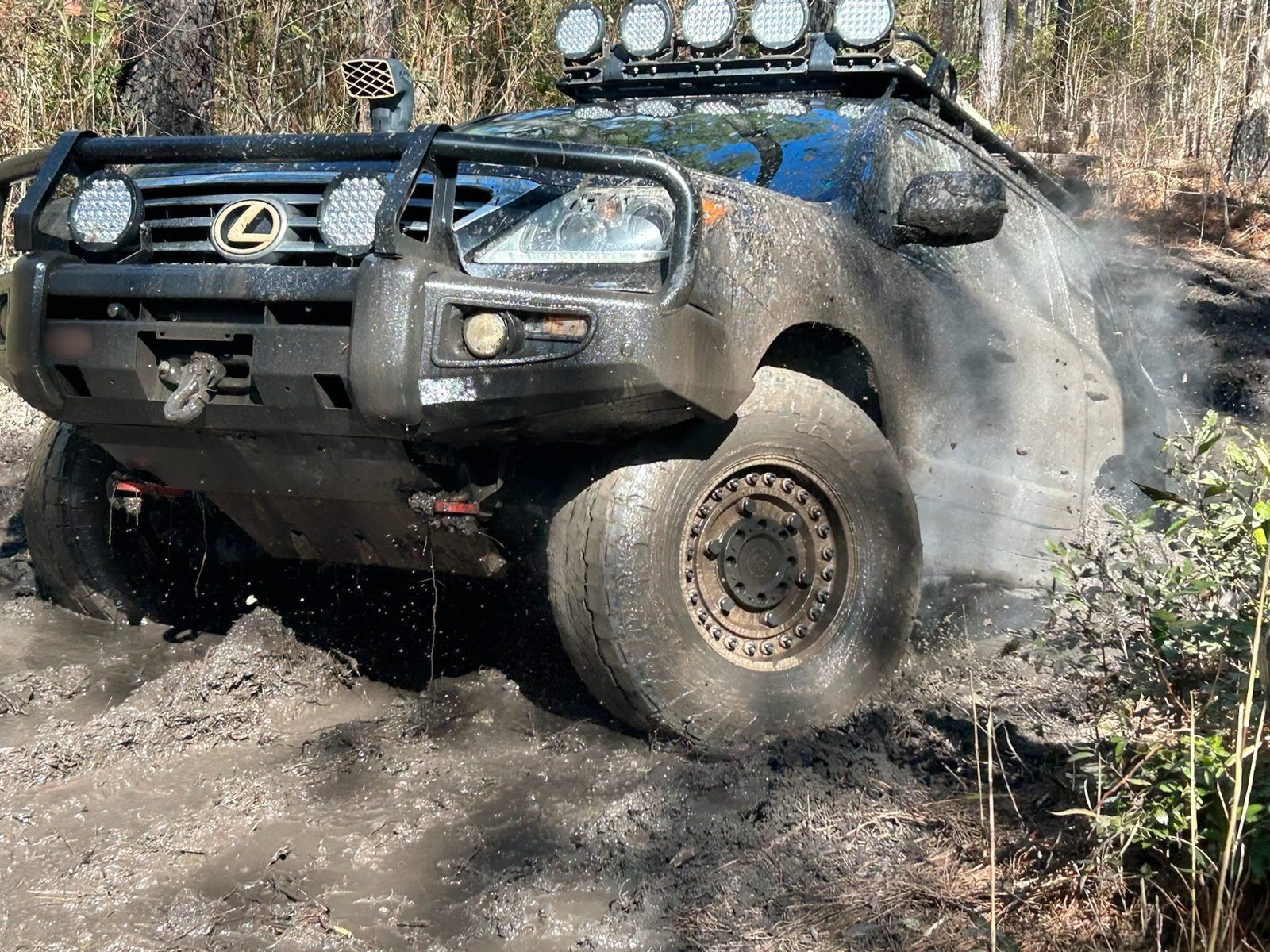
A garden hose or a low-pressure wand does the job. Work along the frame rails, the crossmembers, the inside of the wheel wells and behind the rocker panels and sliders. Boxed frames have drain holes and openings, and wet sand packs into them and sits there. Aim water into those openings until it runs out clean. Body mounts collect the same mix.
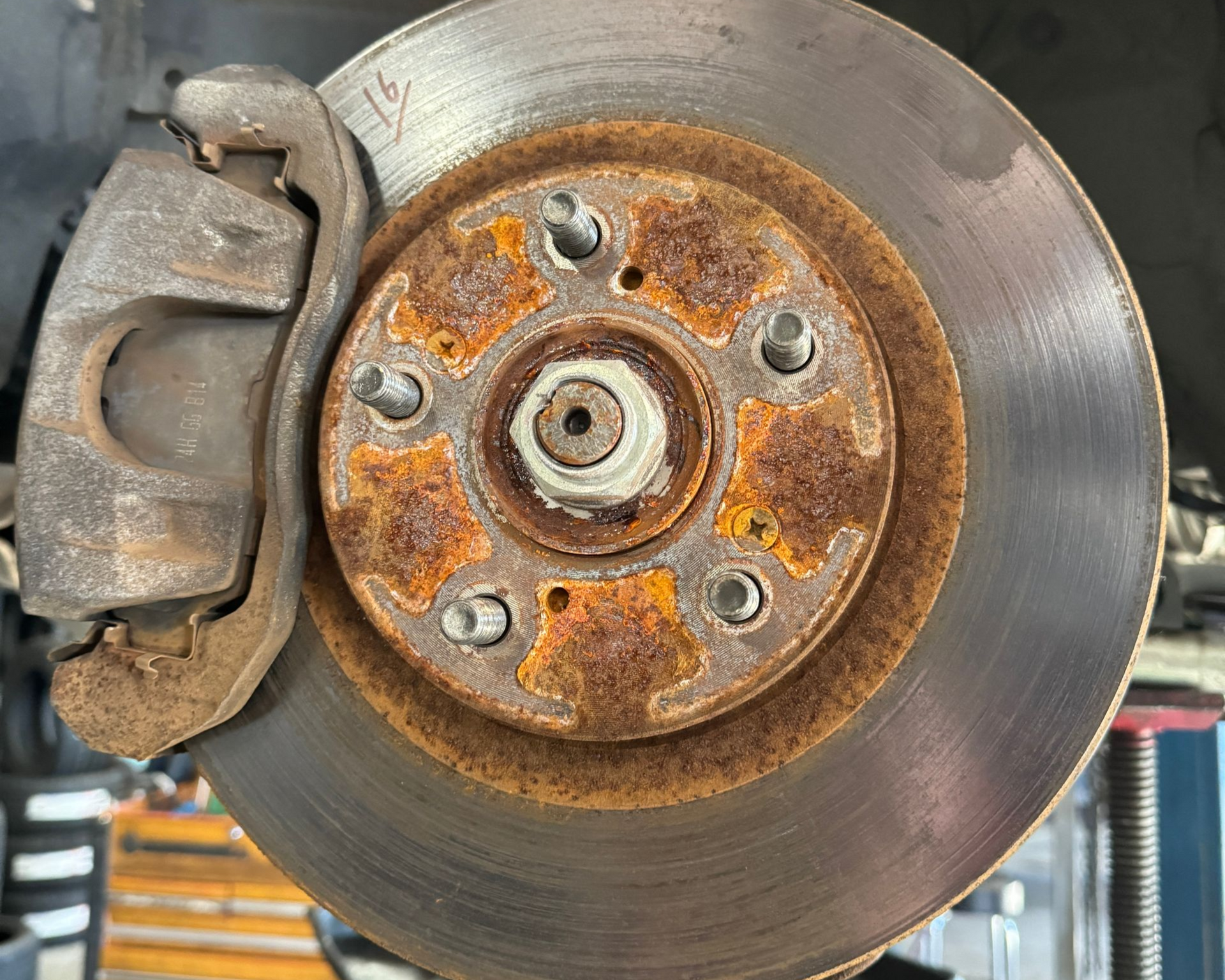
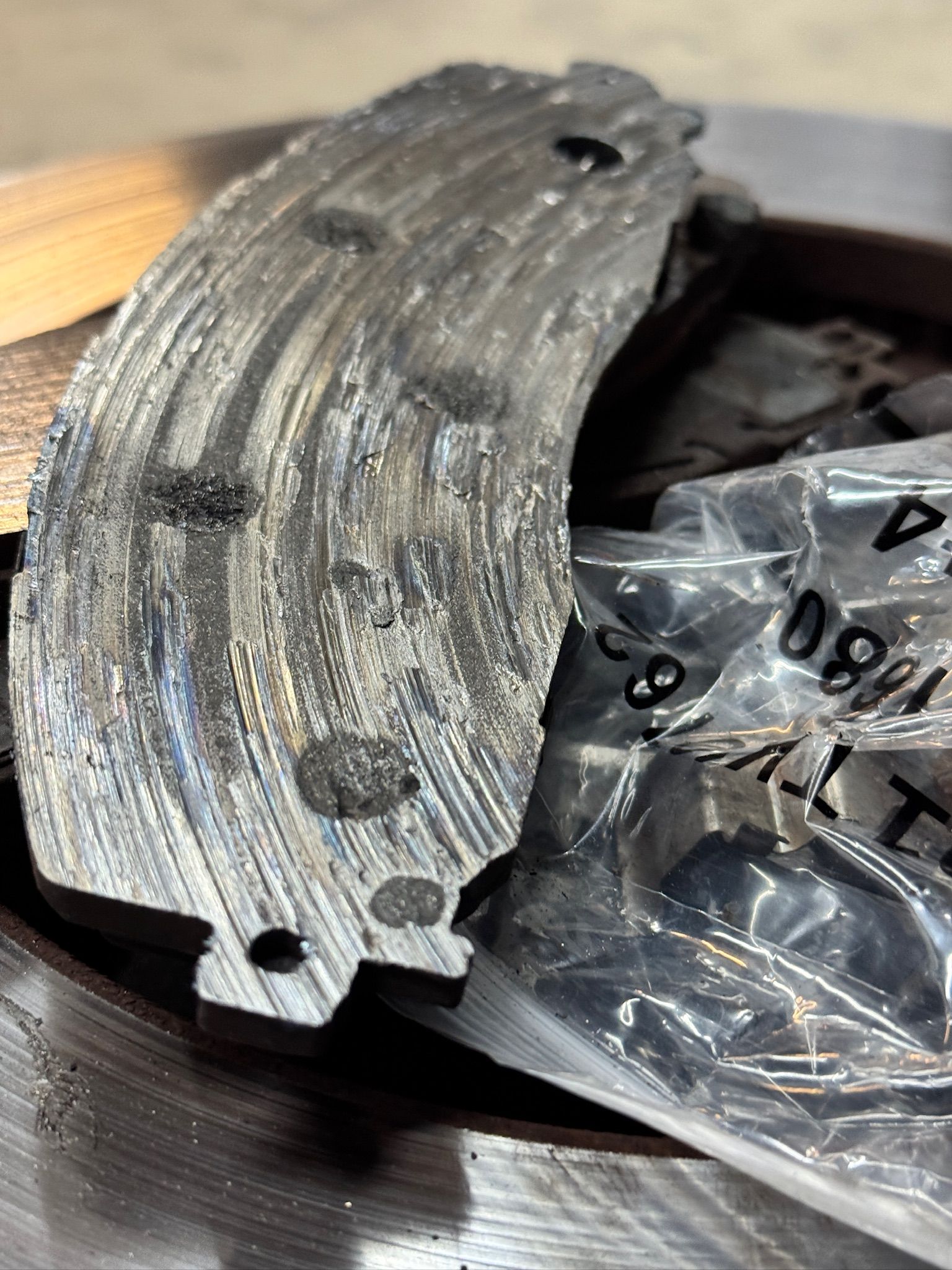
Rinse the brakes too. Mud packed around calipers holds water against the pads and rotors, and you'll see uneven pad wear later. Keep a pressure washer off seals, CV boots, wheel bearings and wiring plugs, because high pressure pushes grit in instead of washing it out.
After beach driving, rinse even if the truck looks clean. Salt film is hard to see. When you're finished, drive around the block and tap the brakes a few times to dry the rotors.
Suspension and steering checks
Once the truck is clean, get down and look at it. Most problems on a lifted truck start in the front end.
If you can safely lift the vehicle, while the wheels are suspended grab the front tire at the top and bottom and rock it. Clunking or movement points to ball joints. Rock it side to side for tie rod ends. Then look at the boots. A torn boot with grease slung around it means sand is already inside the joint, and that joint won't last long.
On a solid-axle truck, the track bar deserves its own look. A loose one usually shows up as steering that feels vague and a truck that wanders in its lane on Highway 70, with a little delay between turning the wheel and the axle following. Have someone turn the wheel back and forth while you watch both ends of the bar. If the bolt or bushing moves before the axle does, it needs attention.
Check control arm bolts, U-bolts and shock mounts, and look for leaking shocks, bent brackets and cracked welds. On a new lift, re-torque the hardware after the first few hundred miles and again after the first couple of trail days. Parts settle, and bolts that were tight at install can loosen up.
About death wobble
Death wobble is the violent front-end shake that kicks in after you hit a bump or expansion joint at speed, and it doesn't stop until you slow way down. It almost always traces back to something loose or worn in the steering and suspension, such as the track bar, tie rods, ball joints or a bad stabilizer, made worse by alignment or tire balance. A new steering stabilizer by itself mostly hides it. If it happens, slow down, get off the road safely and have the front end checked before you drive at highway speed again.
Alignment
Every lifted truck needs an alignment after the lift goes in. After that, check it when you replace steering or suspension parts, after a hard hit on the trail, or when you notice the wheel sitting off-center, a pull on NC 24, or tires wearing on one edge. Lifted trucks often need caster and pinion angle corrected, not only toe, and a good shop will tell you if a worn part has to be fixed before the alignment will hold.
Water in the axles and transfer case
This is where water crossings do the most damage, and it happens quietly. A hot axle that drops into cool water contracts and pulls water in through the breather vent or a tired seal.
Pull the fill plug and look at the gear oil. Healthy oil is clear amber or dark. Water turns it milky, tan or foamy, something like a chocolate milkshake. If you see that, change it now, not at the next service. Water-contaminated gear oil wears bearings and gears fast.
Check the breather hoses on both axles and the transfer case. Mud clogs them and a kinked hose does the same thing. Trucks that cross deep water a lot do well with breathers extended up high. Look for wet spots at the pinion seals and axle ends too. If you went through water deeper than the axle housings, plan on checking the front and rear differentials and the transfer case.
The same goes for driving through the low spots that flood after a storm. That water is often brackish, and the drivetrain doesn't care whether it came from a trail or a flooded road.
Wheel bearings
Fine sand and water that get past a hub seal will ruin a bearing. The early sign is a hum or growl that changes with speed and sometimes changes when you swerve gently left and right. Catching it then costs a lot less than a hub that fails on the side of the road.
Wiring, lights and the battery
Light bars, aux lights and add-on switches mean extra connectors, usually mounted low on the bumper where they go underwater first. Look for green or white crust on connectors, fuse holders and ground points. Make sure the wiring isn't rubbing on the bumper or frame, since one sharp edge and a few trail days will cut through insulation. Turn on every light and check for fog inside the lenses. Clean the battery terminals while you're there, because salt air here corrodes them faster than it would inland.
Air filter and snorkel
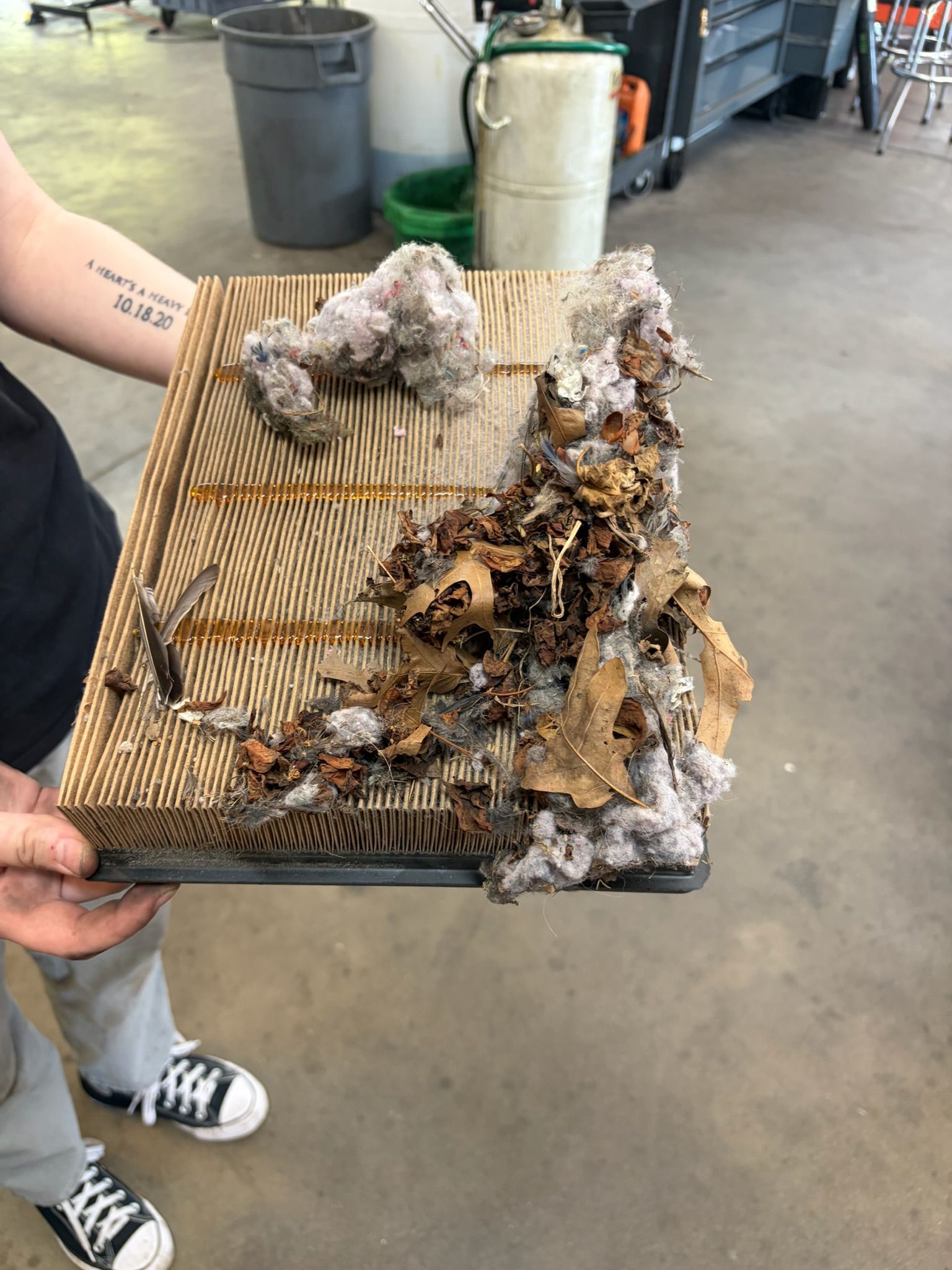
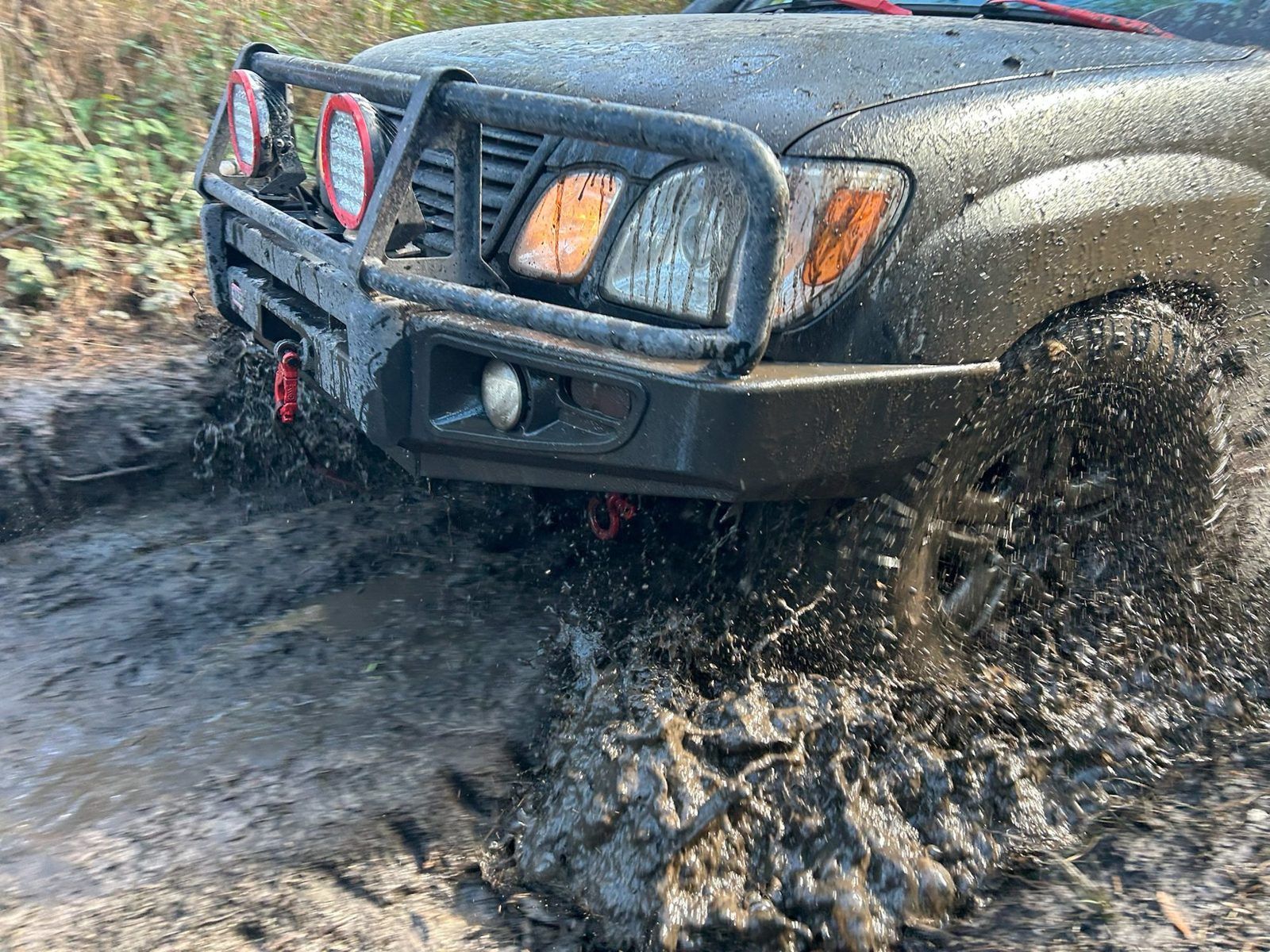
Beach sand and spray load up an air filter well ahead of the normal schedule, so pull it and look after a beach trip. If you run a snorkel, check the head, the hose clamps and the seal where it passes through the body. A snorkel only works if every joint between the head and the airbox is sealed. Any water in the airbox needs to be looked at right away.
Tires after airing down
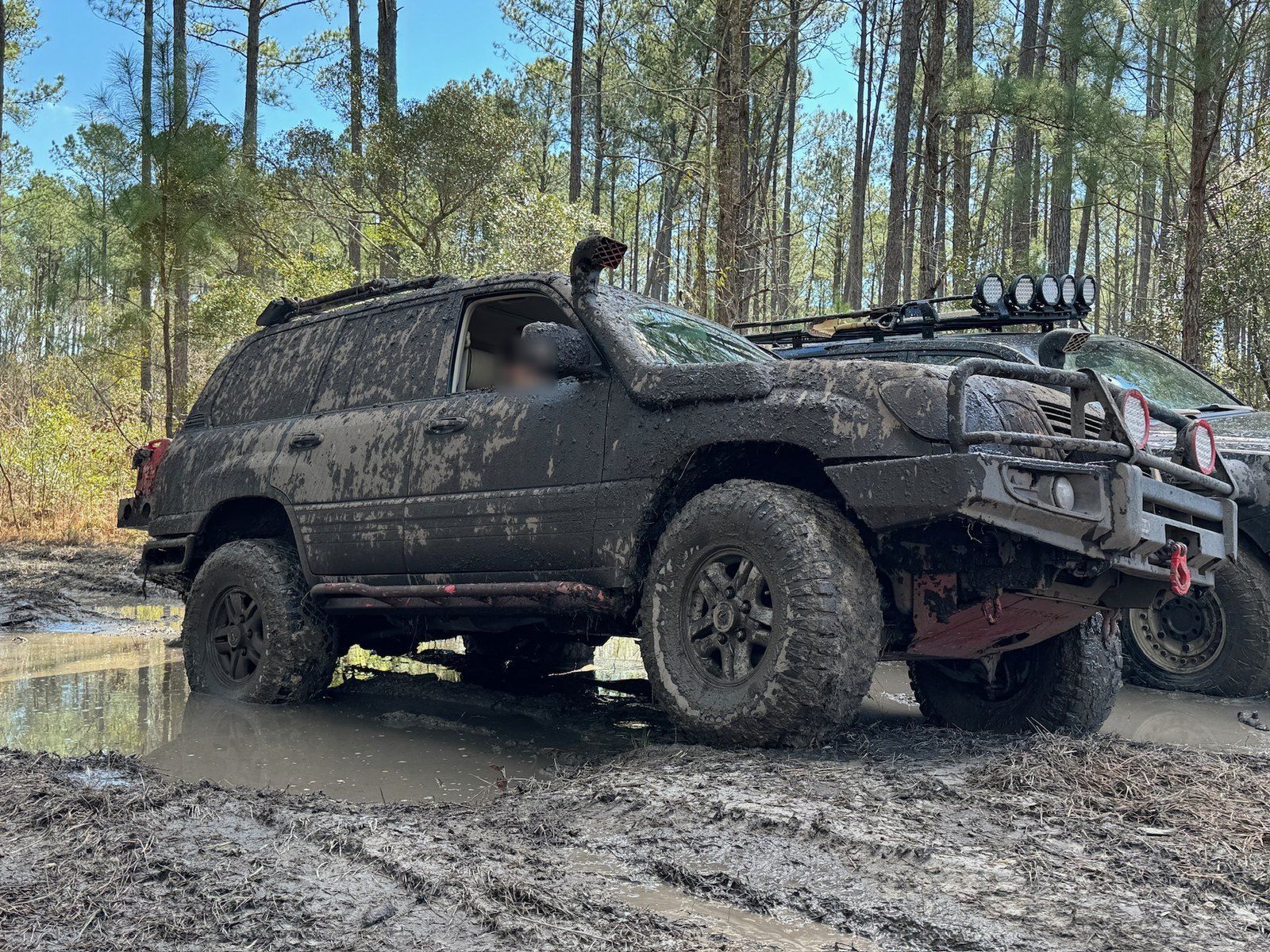
Air back up before you get on the pavement. Driving on the street at sand pressure heats the tires and wears them unevenly. Use the door placard, or the pressure recommended for your tire size if you've gone bigger. Check the sidewalls for cuts from roots and stumps, and knock packed mud out of the inside of the wheels. A wheel full of dried mud will vibrate like it's out of balance. Big tires also need regular rotation to wear evenly.
Bumper-mounted winch maintenance after heavy use
A front bumper winch sits right in the spray, the mud and the salt, and most people don't think about it again until they need it. After a hard pull or a muddy day, give it some attention.
The line
Synthetic rope and steel cable need different care. With synthetic, spool it all the way out and rinse it. Sand works into the fibers and cuts them from the inside, so a rope can look fine and still be weak. Look for fraying, flat spots and shiny, stiff sections where heat glazed it. Let it dry completely before you put it back on the drum, or it will hold moisture against the drum.
Steel cable is about kinks, crushed spots, broken strands and rust. Wear gloves, because broken strands will cut you. Either way, respool it evenly under some tension. A loose wrap left over from a pull lets the line dig into itself on the next one and get damaged.
Hook, fairlead and the winch body
Make sure the hook latch snaps closed and the hook isn't bent open. A roller fairlead should spin freely. A hawse fairlead needs a smooth face with no burrs, especially with synthetic rope. Rinse the winch, the control box and the bumper with fresh water after beach or mud use, but keep high pressure off the motor and control box.
Electrical and the motor
A winch pulls a lot of current, so a weak connection shows up as slow pulls and heat. Check the solenoid or contactor box for corrosion and loose terminals, follow the cables to the battery for chafing, and make sure the battery ends are clean and tight. Motors can take on water in deep crossings. Rust stains along the motor seams, a rough sound or slow running mean it should be checked before it seizes.
Mounts and a test pull
Big pulls load the winch mount and the bumper. Check the winch mounting bolts and the bumper-to-frame bolts, and look for cracks or bending around the mounts. Then do a short pull with a light load. It should spool in and out smoothly, the brake should hold, and the remote or switch should work. Find out in the driveway, not stuck in the woods.
When to bring it in
Plenty of this you can do in the driveway. Some of it is easier with the truck up on a lift. Bring it in if you have any front-end shake or steering play, milky gear oil, a grinding or humming noise, a soft brake pedal or brake noise after mud or beach driving, flickering lights, or a winch that's slow or noisy.
Questions we hear a lot
How soon do I need to wash it after driving on the beach?
The same day if you can. Rinse underneath and in the wheel wells even if the truck looks clean, because salt residue is hard to see.
Do I need a permit to drive on the beach at Emerald Isle?
Many beach driving areas on the Crystal Coast require a permit and have seasonal rules. Check with the town or park that manages that stretch of beach before you go, since the rules differ by place and time of year.
My gear oil looks like chocolate milk. Is that bad?
Yes. Water got into the axle, usually through the breather or a seal. Change the fluid right away and find out how the water got in so it doesn't happen again.
Why does my truck shake like crazy after hitting a bump on the highway?
That's most likely death wobble, caused by something loose or worn in the front end. It isn't safe to keep driving at highway speed. Have the front end inspected as soon as you can.
Can you look at my lifted diesel after a trail day?
Yes. We inspect and repair lifted trucks and SUVs, diesels included, for drivers from Swansboro, Cape Carteret, Emerald Isle, Newport, Morehead City and the rest of Carteret, Onslow and Craven counties.
Bring your lifted 4x4 to Beachview Auto Service
After a muddy weekend or a beach run, our technicians can go over the suspension, steering, drivetrain fluids, wiring and winch and catch the small stuff before it gets expensive. Beachview Auto Service is veteran-owned and has been part of the Crystal Coast since 1950. Walk-ins are welcome, though appointments are encouraged. We offer 24-hour drop-off and same-day service whenever it's available.
- Morehead City: 4920 Arendell St (we share a parking lot with Harbor Freight), 252-726-3363
- Cedar Point: 909 Cedar Point Blvd (next to Dunkin'), 252-764-2008
Call either shop to set up an inspection and alignment for your lifted truck or SUV.