Fleet Maintenance Tips for the Crystal Coast: A Mileage Schedule for Work Trucks and Vans
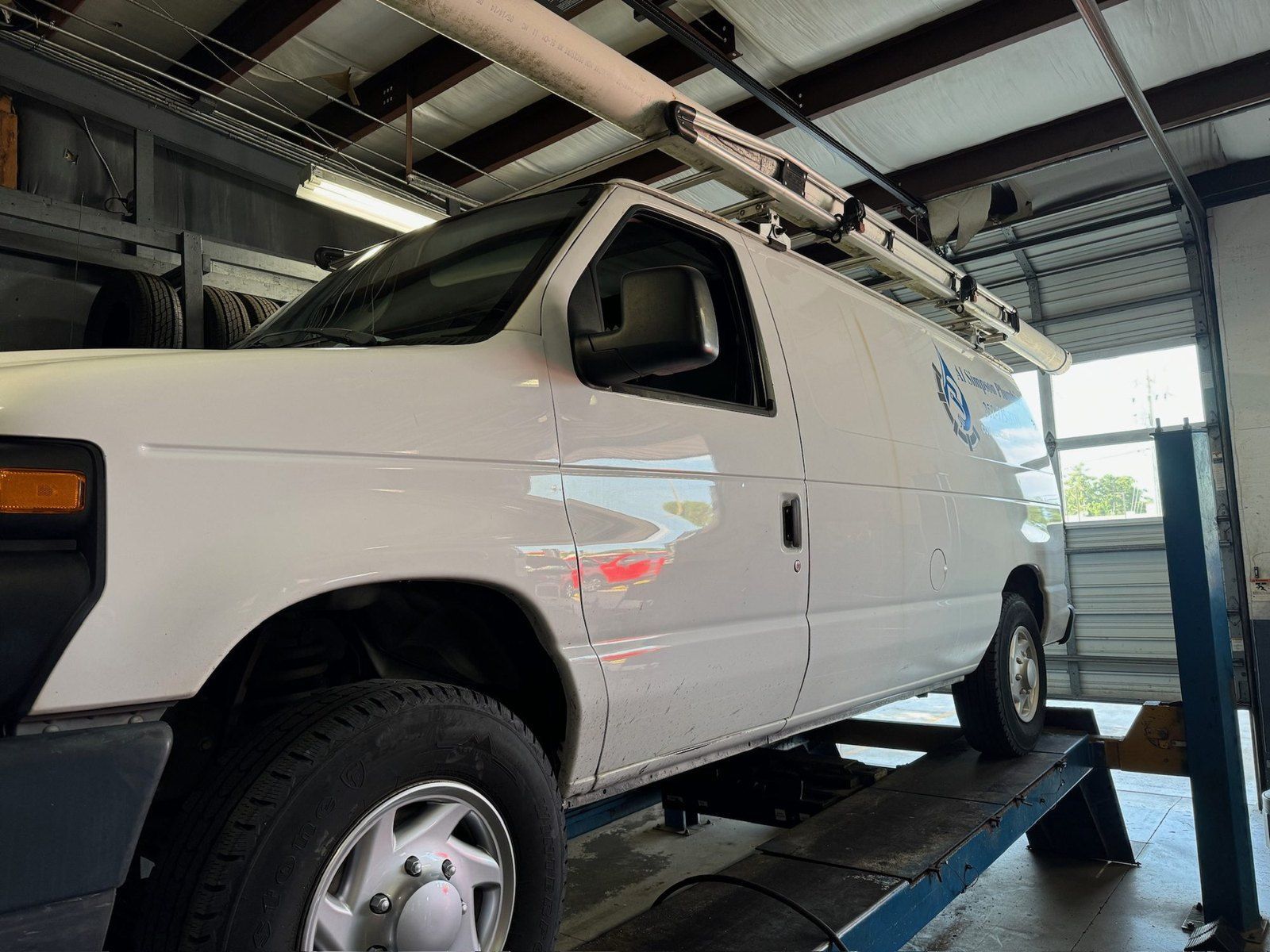
A work van in Morehead City can put on fewer miles than a highway van out of Raleigh and still wear out faster. It sits in salt air overnight. It makes a dozen stops a day, a few miles apart. It idles in a customer's driveway with the A/C running while the crew works. The odometer doesn't record most of that, but the underside of the van does.
This post is a maintenance schedule built for those conditions. It covers what salt and sand do to trucks and vans here, why short trips and idle time count, and what to check as the miles add up. The mileage markers come from our own repair records on 224 commercial vans. When we're speaking from what our technicians see in the bays instead of from data, we say so.
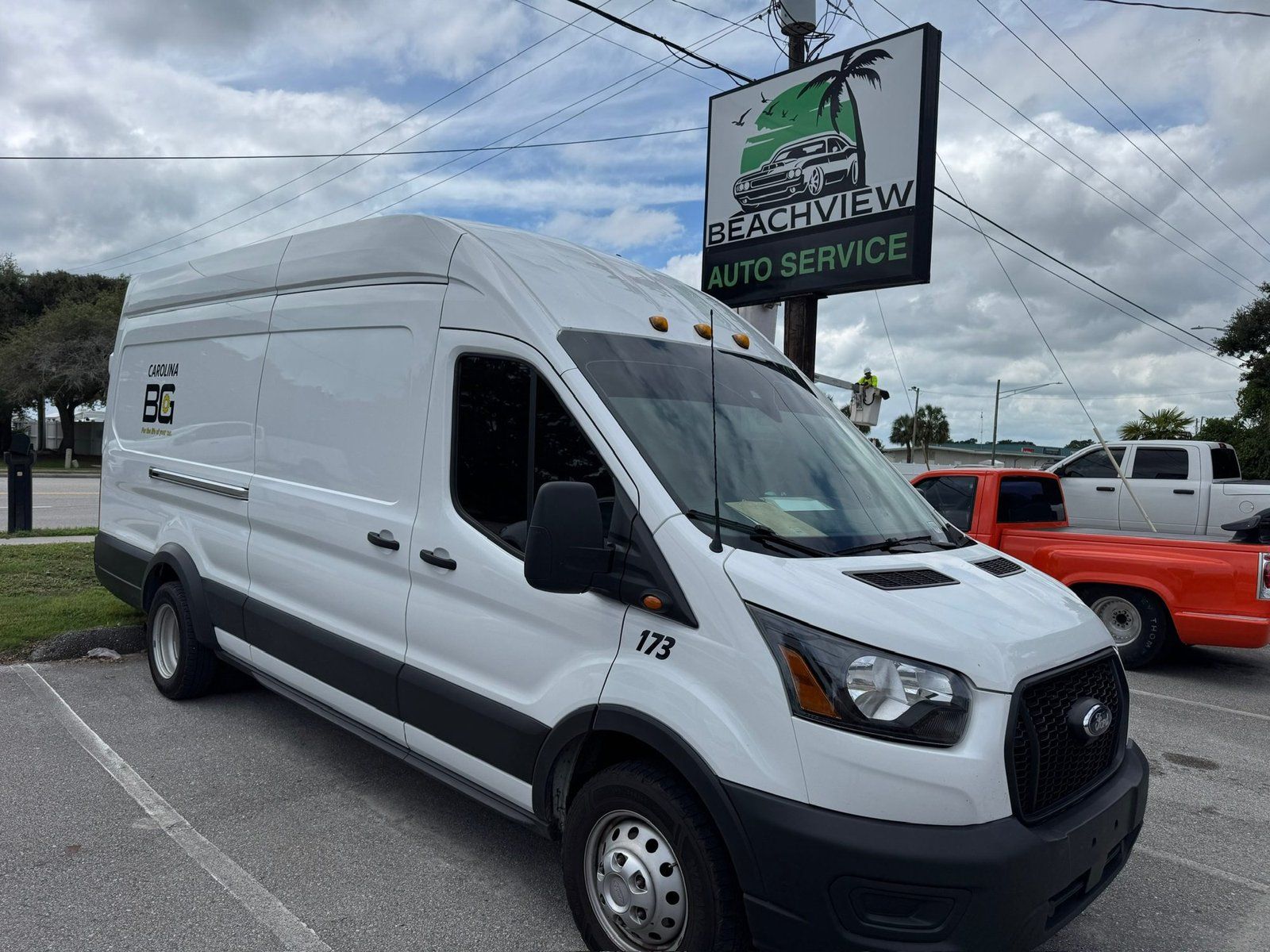
Beachview Auto Service is veteran-owned and has served the Crystal Coast since 1950. Our Morehead City and Cedar Point shops see work trucks and vans from Carteret, Onslow and Craven counties every week. For what we service and how fleet work runs at our shops, see our fleet vehicle repair and maintenance page.
Most coastal fleets belong on the "special conditions" schedule
Most owner's manuals have two maintenance schedules. The normal one assumes steady driving on paved roads. Ford calls the second one Special Operating Conditions. It covers extensive idling, low-speed commercial driving like delivery work, short trips that never let the engine reach operating temperature, and driving in dusty or sandy conditions.
Ford's manual says those short trips cause fuel dilution and an increase in the engine oil level. For dusty or sandy operation, it calls for an oil and filter change every 5,000 miles or six months, whichever comes first. On the same 5,000-mile cycle it adds a tire rotation, a tread depth check, and an inspection of the wheels and related parts for noise, wear, looseness or drag. Ford also says the extra schedule applies when you primarily drive in those conditions, not when you do it now and then.
Contractor vans on sandy job sites, landscaping trucks, and delivery vans working stop-and-go along Arendell Street usually fit that description. Intervals vary by make, model and engine, so check the manual for each vehicle in your fleet.
Count idle hours, not just miles
Idling wears out oil without adding miles. Ford's police and fleet manuals put a number on it. For oil change timing, they count each hour of idling as about 33 miles of driving. Their example is a car with 3,000 road miles and 61 idle hours, which has reached a 5,000-mile oil change.
If your trucks or vans have an hour meter or idle meter in the cluster, write that reading on every work order next to the odometer. A truck that idles to run a liftgate, power tools, or the A/C for a crew on lunch can hit its oil change well before the odometer says so.
Salt air and sand: what they do under a work truck
This section is from our shop floor, not from the repair data.
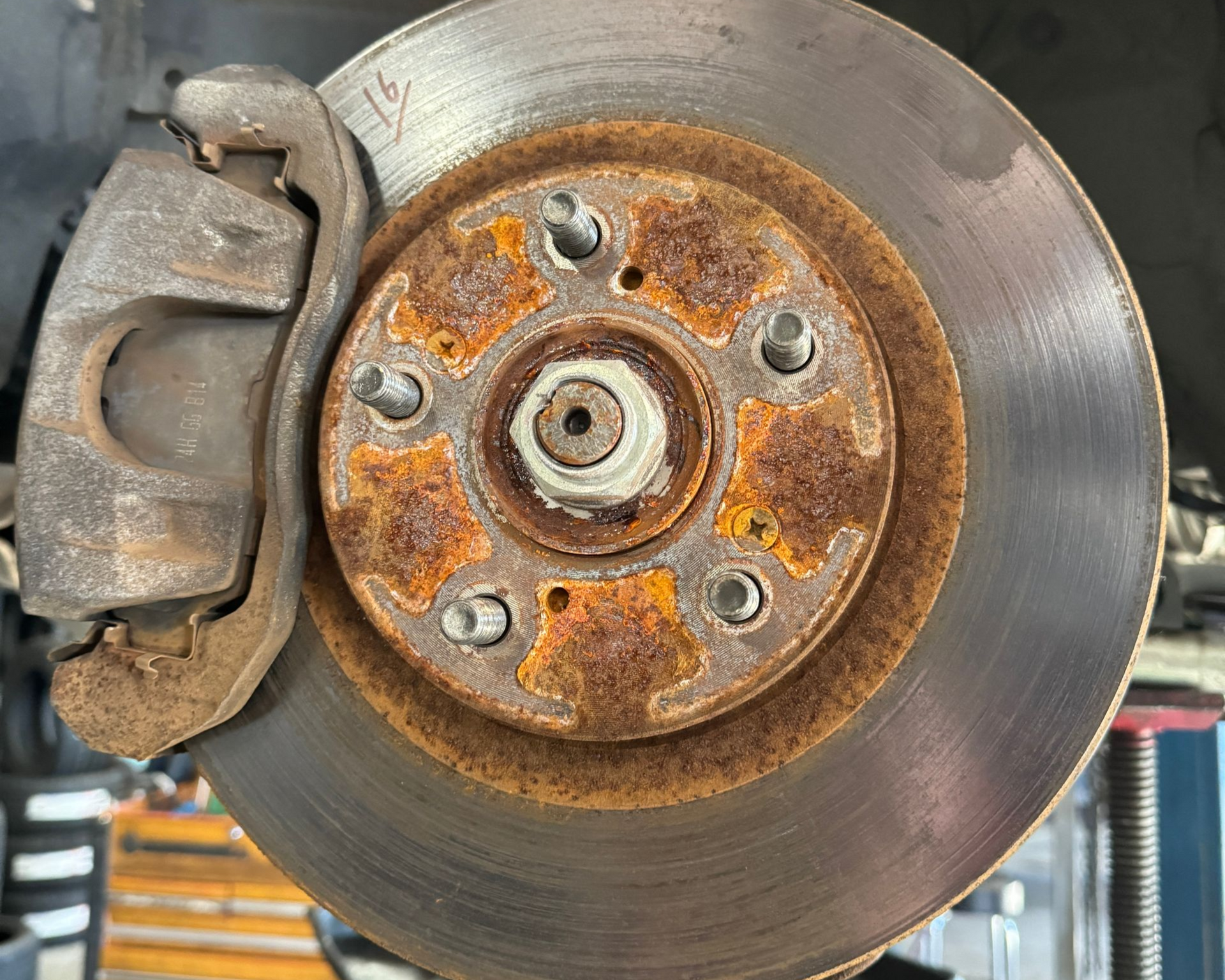
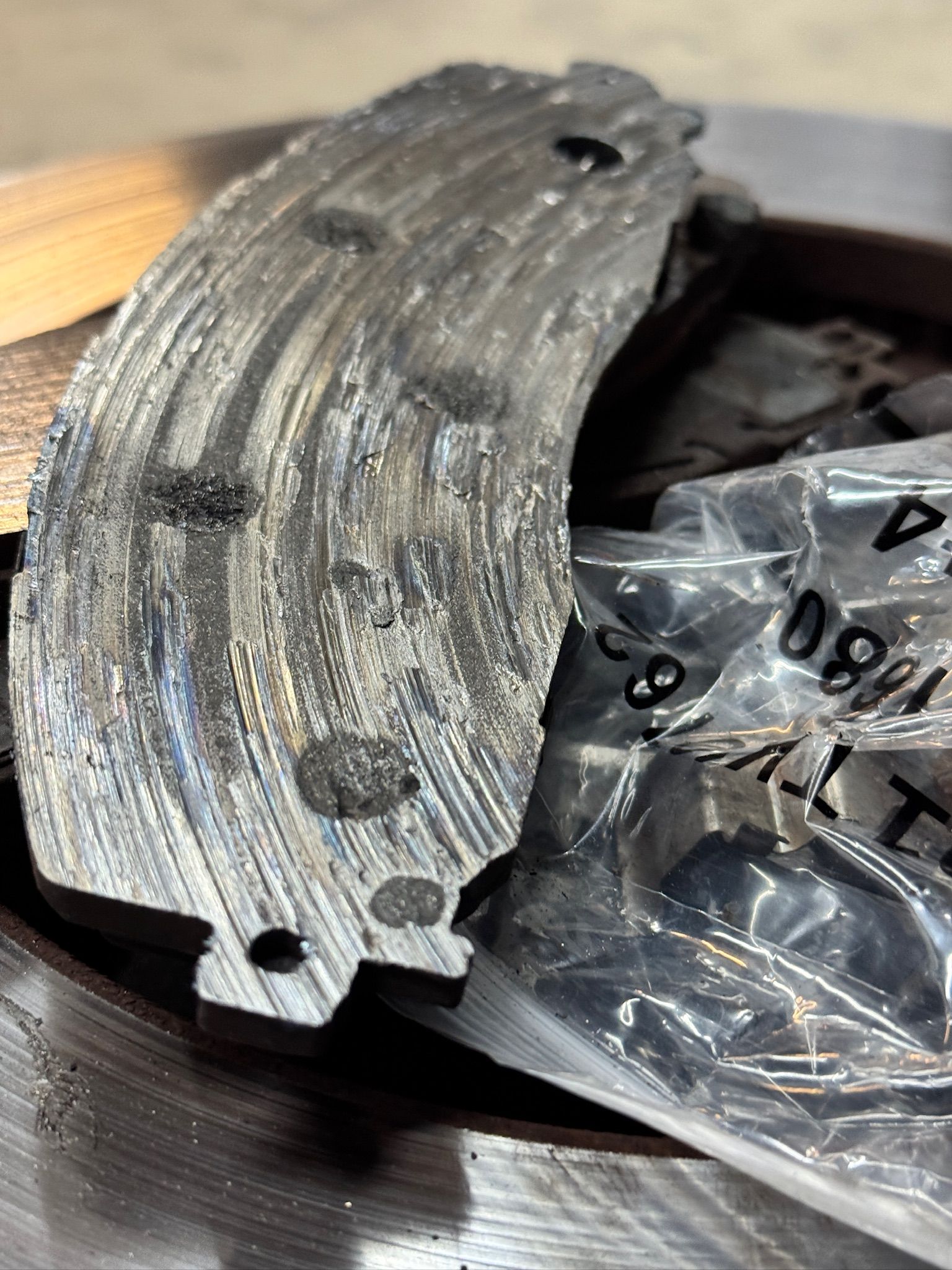
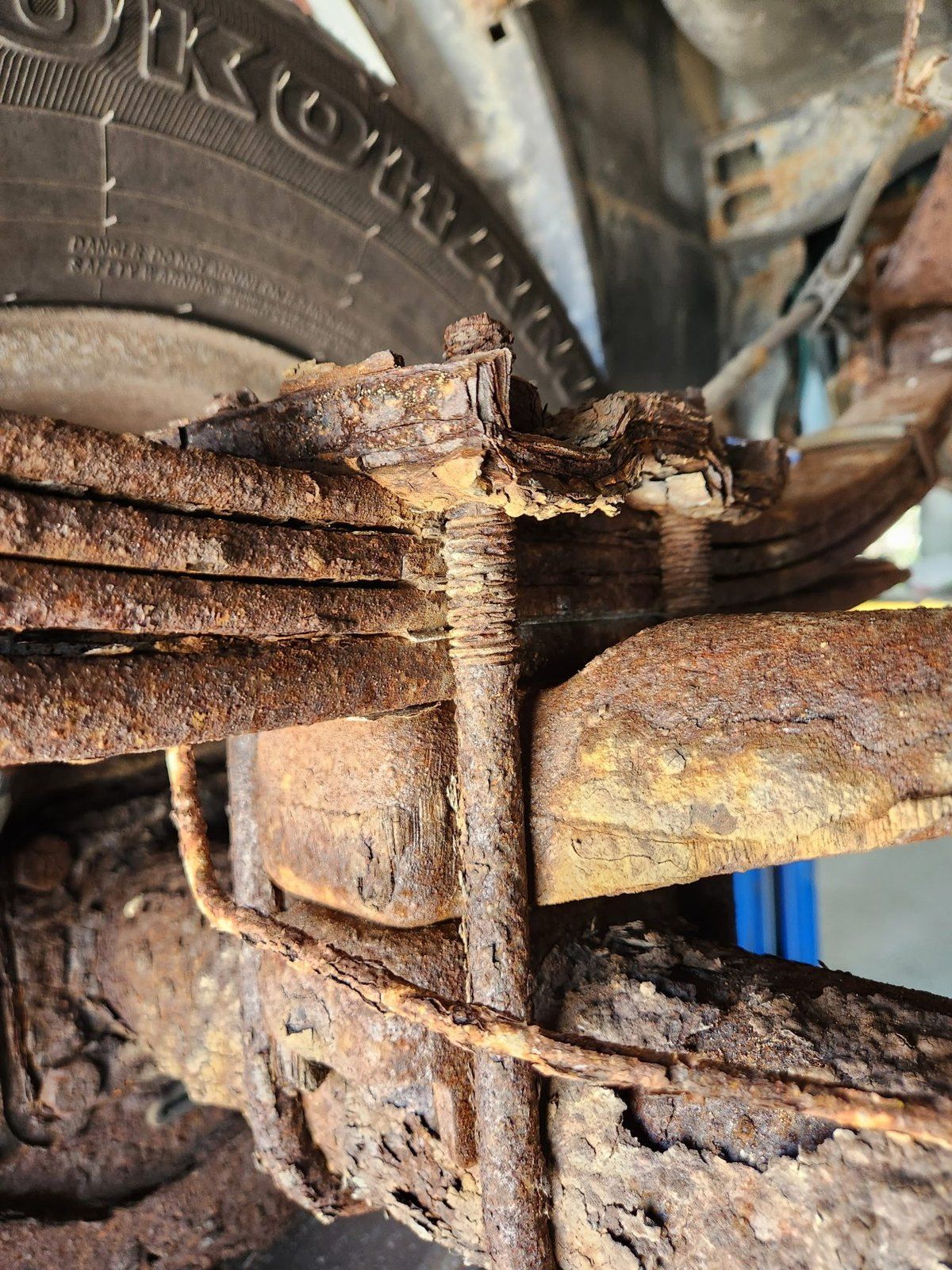
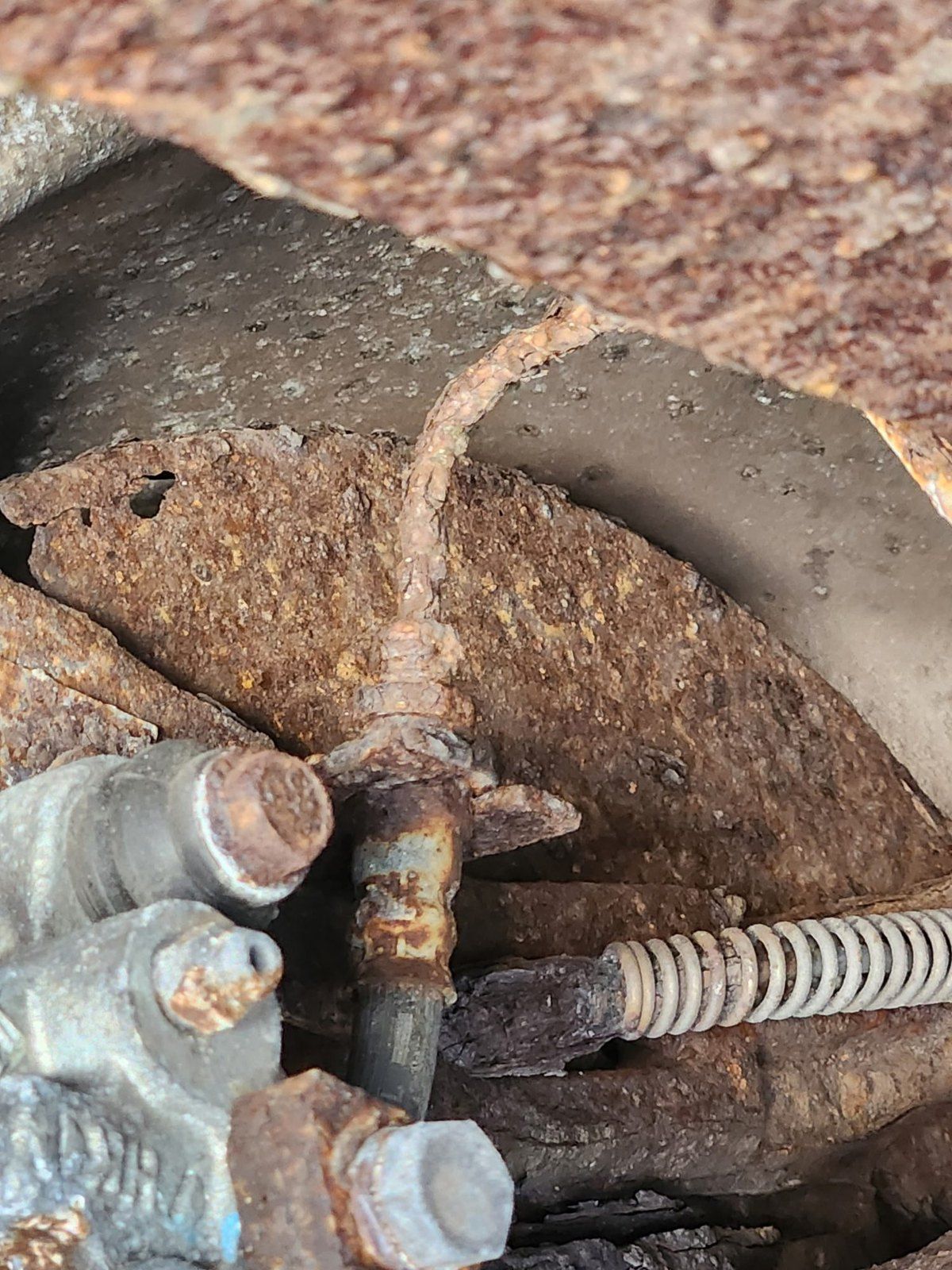
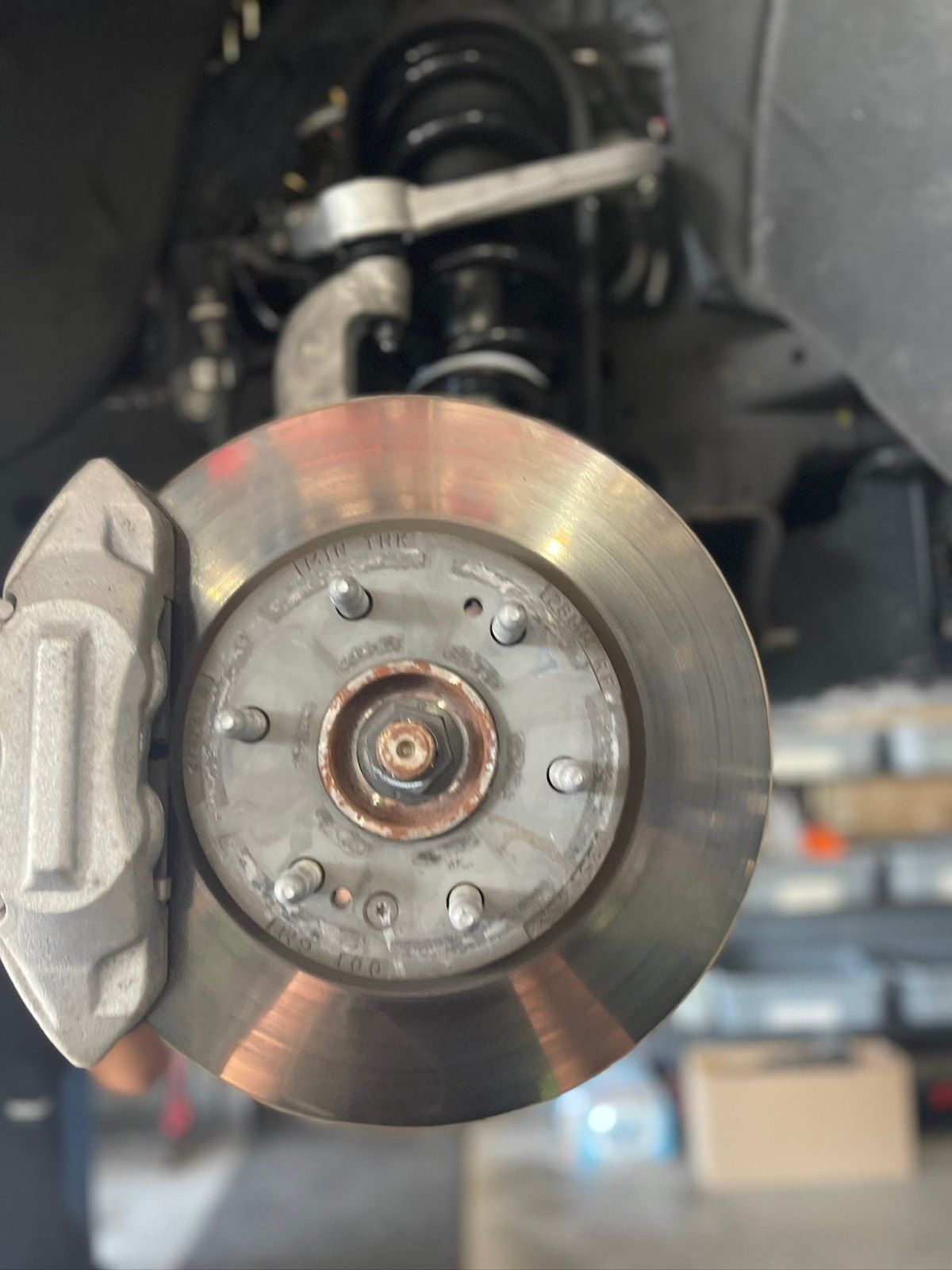
On the coast, rust starts where salt water sits and nobody rinses it off. We see it on leaf springs and their U-bolts, on brake lines where they run along the frame and axle, and on parking brake cables and exhaust hangers. It also gets into the bolts that hold hitches and ladder racks. A brake line fitting can look fine from above and be scaled through underneath. A seized bolt turns a short job into a longer one, because a technician has to heat it or cut it out.
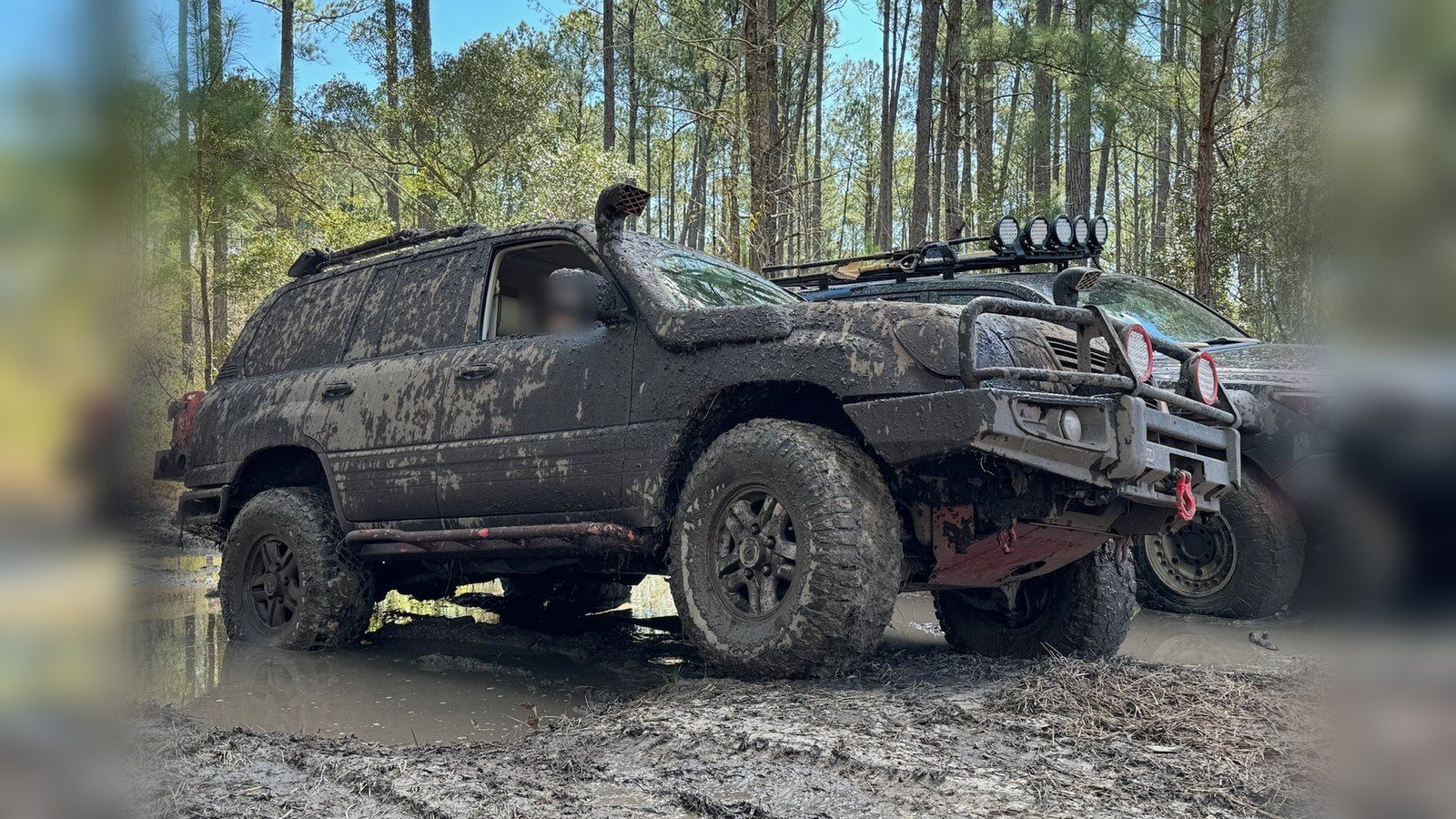
Sand does its damage in moving parts. One of our technicians put it this way:
"Off-roading or mudding in Eastern NC, especially near the coast can result in grains of sand getting trapped between moving parts causing premature wear and tear. If that trapped debris isn't washed out right away, it can act like sandpaper and result in component failure."
A Beachview technician
What that means for your schedule:
- Rinse the underside, wheel wells and frame rails with fresh water after beach access roads, boat ramps or flooded streets. The same day is best.
- Have a technician look at brake lines, fuel lines, leaf springs and suspension bolts on a lift at every oil change, not once a year.
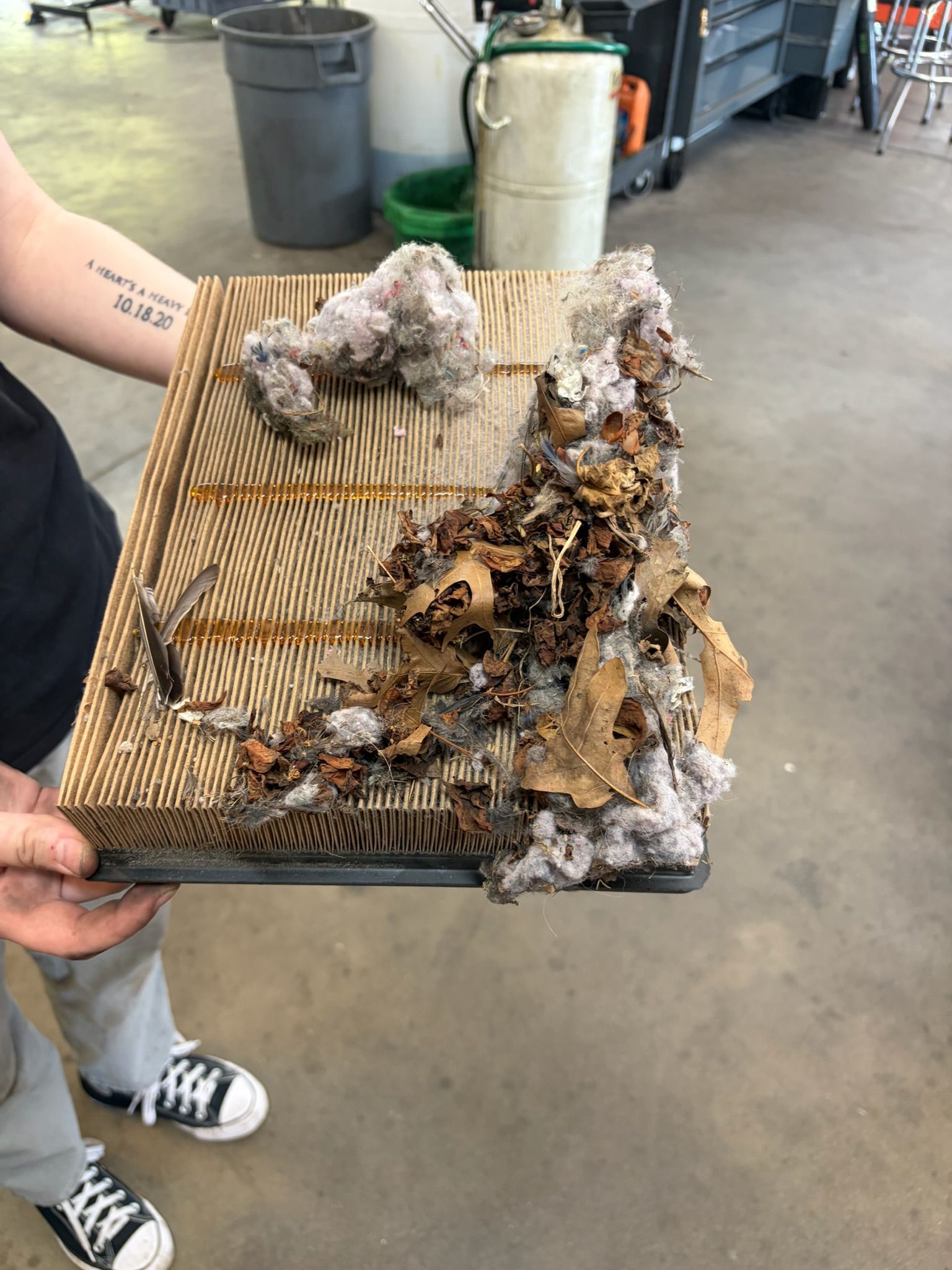
- Check engine and cabin air filters more often if the truck works on sandy sites. Ford's special conditions schedule says to inspect them frequently.
- Ask for any rusted fasteners on the ladder rack, hitch and body mounts to be noted on the work order before they seize.
Short trips and stop-and-go wear
Ford's manual already tells you that short trips dilute the oil with fuel and raise the oil level. If a driver checks the dipstick and finds it reading higher than last week, or the oil smells like gas, bring the vehicle in so a technician can look at it.
From our shop floor: vans that make many short stops tend to go through front brake pads faster than vans that run the highway, because they brake hard and often at low speed. Batteries on those vans also work harder. The engine gets started many times a day, and accessories like lights, inverters and A/C run while the alternator turns slowly. A battery and charging system test at each oil change can catch a weak battery before a crew gets stranded at a job site.
What to check by mileage
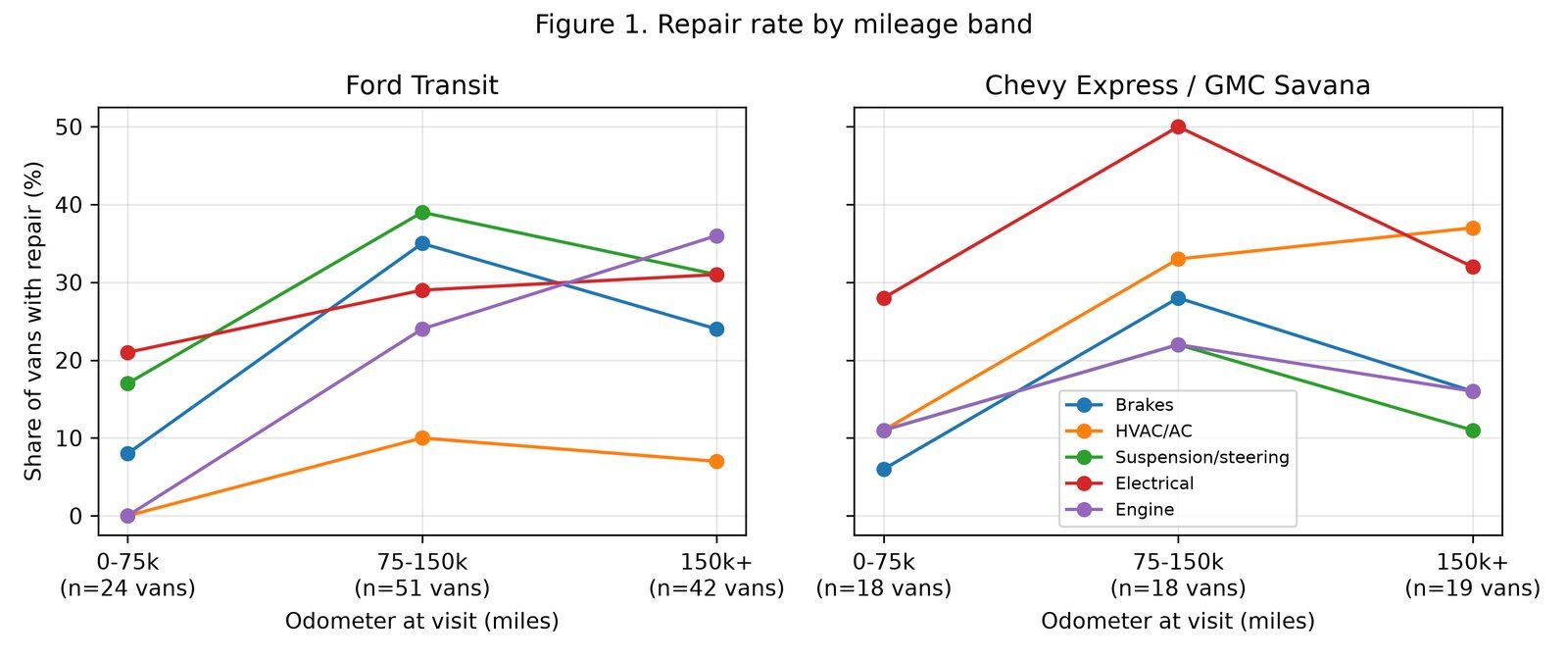
Our mileage markers come from a study of 903 repair orders on 224 commercial vans at our two shops, January 2023 to October 2026. The full results, charts and limits are on our commercial van repair costs by mileage page. These are van numbers. Work pickups face the same coastal wear, but we haven't published data on them.
Every oil change
Go by the oil life monitor, by idle hours, or by 5,000 miles or six months if the vehicle runs sand.
- Oil and filter, with the odometer and hour readings on the work order
- An underbody look on the lift: brake and fuel lines, leaf springs, exhaust hangers and frame
- Tires: tread depth, pressure, and sidewall damage from curbs and job sites, plus rotation per the manual
- Brake pads, where the wheel design lets a technician see them
- Engine air filter, if the vehicle works in sand
- Battery and charging system, for short-trip vans
Under 75,000 miles
In our data, the big repair categories were uncommon on Ford Transits in this band. 8% had paid brake work, 17% had suspension and steering work, and none had engine work. On Chevy Express and GMC Savana vans, 11% needed paid A/C work. This is the stretch to keep up with oil, tires and rust checks.
75,000 to 150,000 miles: plan a full inspection
This is where repairs climb. Between 75,000 and 150,000 miles, Transit brake work rose to 35% of vans, suspension and steering to 39%, and engine work to 24%. Express and Savana vans needing paid A/C work rose to 33%. A full inspection around 75,000 miles lets you budget for brakes, steering parts and A/C before they fail in the middle of a job. Our coastal heat and humidity are hard on air conditioning, so have the A/C checked before summer on older Express and Savana vans.
130,000 to 140,000 miles: budget for a big repair
The median odometer at the first major repair ($500 or more) was 138,312 miles for Transits and 130,291 miles for Express and Savana vans. When a van gets close to that range, decide whether you'll keep it and plan the repair, or plan its replacement.
Past 150,000 miles
Transit engine work reached 36% of vans past 150,000 miles, and Express and Savana A/C work reached 37%. Have a technician check for oil and coolant leaks and test the A/C at each visit.
Replace the set, not just the part that failed
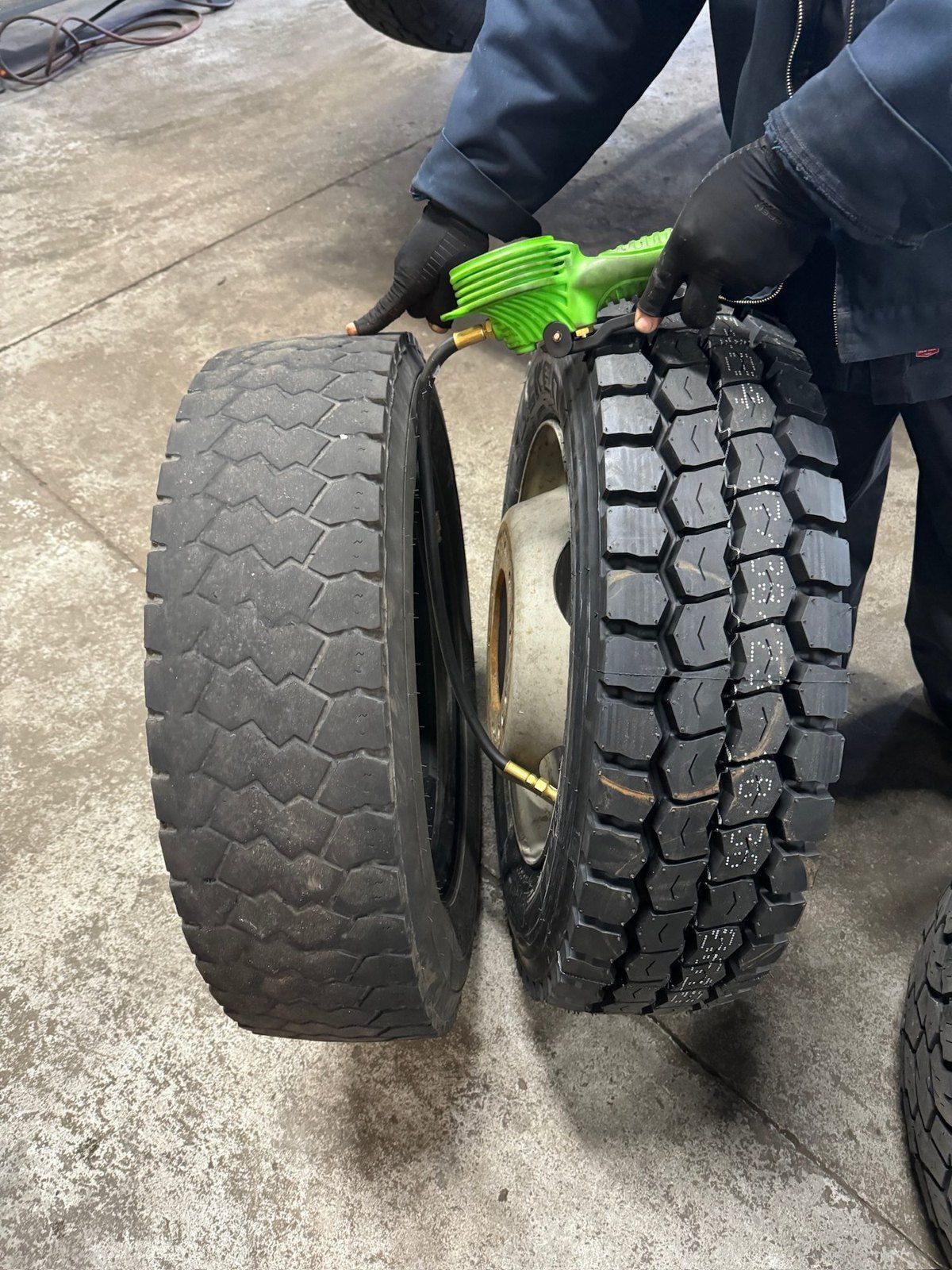
Return visits were common in our data. 27% of Transits and 14% of Express and Savana vans came back for the same type of repair within 14 to 365 days. Wheel and lug work (including TPMS) and engine work led the Transit repeats.
From our shop floor, much of that is the rest of a component set catching up. Some fleets replace only the part that failed that day. The other parts in the set are the same age and saw the same use, so they often fail within the next year.
- TPMS sensors. Their batteries tend to reach end of life within about 12 months of each other. Replacing one sensor at a time can mean several trips back.
- Glow plugs. If one or two have failed, the others are likely to fail soon after.
- Fuel injectors after a known heavy fuel contamination. Replace one and the others often follow soon after.
- Valve stem seals and other parts near end of life that are easy to reach during the job you came in for. Doing them while the area is already apart usually costs less labor than tearing it down again later.
When a vehicle is already apart, ask the technician which related parts are near end of life. You decide what to do now and what to plan for later.
The same data showed that customers rarely turned down a recommended job, but the ones they put off were the expensive ones. Only 6% to 14% of offered jobs were declined, yet those jobs made up 21% to 38% of offered dollars. Putting off a big repair is sometimes the right call. Write it down with the mileage so it gets scheduled instead of forgotten.
Use rained-out days for maintenance
Rain and wind cancel a lot of outdoor work on the coast. A day when the crew can't work is a good day to get a truck or van looked at.
"When the weather causes job cancelations for our fleet customers, we are happy to work their vehicles in for last minute maintenance so the vans are in the shop during periods of underutilization so their crew & vehicles can get back on the road when the weather allows."
Logan Senf, shop owner
A coastal fleet schedule at a glance
| When | What to check | Why it matters here |
|---|---|---|
| After sand, salt water or flooded roads | Fresh water rinse of underside, wheel wells and frame | Salt and trapped sand keep working until they're washed off |
| Every oil change | Oil and filter, hour reading, underbody on a lift, tires, brakes, air filter, battery | Idle time, short trips and salt wear don't show on the odometer |
| Every 5,000 miles or six months (sandy use, per Ford) | Oil and filter, tire rotation, tread depth, wheel and related parts inspection | Ford's schedule for dusty or sandy operation |
| Around 75,000 miles | Full inspection of brakes, suspension, steering, engine and A/C | Repair rates jumped in this band in our van data |
| Around 130,000 to 140,000 miles | Plan for a major repair, or plan replacement | Median odometer at first $500+ repair in our van data |
| When one part in a set fails | Ask which matching parts are near end of life | Same-age parts often fail within the next year (shop floor) |
Bring your fleet vehicles in
Both of our shops service fleet, utility and municipal vehicles. Both do NC safety inspections, and the Morehead City shop also does emissions inspections. Bring your trucks and vans into either shop so a technician can inspect them. Any estimate is subject to an in-person inspection by a qualified technician.
- Morehead City: 4920 Arendell St, (252) 726-3363
- Cedar Point: 909 Cedar Point Blvd, (252) 764-2008
We answer the phones Monday through Friday, 8:00 AM to 5:00 PM, and both shops are closed on weekends.
Sources
- Beachview Auto Service, Commercial Van Repair Data: What 224 Fleet Vans Taught Us. Full paper: Senf, L. (2026). Repair Patterns by Mileage in Commercial Vans at Two Independent Coastal North Carolina Repair Shops: Ford Transit Compared with Chevrolet Express/GMC Savana, 2023 to 2026. Zenodo. https://doi.org/10.5281/zenodo.23698925
- Ford owner's manual, Special Operating Conditions Scheduled Maintenance
- Ford 2011 Crown Victoria owner's manual, Engine Idle Hour Meter, Scheduled Maintenance